I woke up at 4 A.M. with the carbon monoxide detecter going off. Not because we were in danger of dying, but because there was a severe brown-out. Lights were at about one tenth of their normal brightness. It was driving me crazy because everybody knows how hard that can be on electric appliances, televisions, and so forth. Cliff suggested I throw the main breaker, which solved that problem. At our house, anyhow. Sister-in-law next door is working nights at present, so our old house was still experiencing the problem. Not to mention the pump in our well.
I called Kansas City Power and Light to report my problem to an automated program. I called again to give them Cliff's sister's number as well.
With no water and no electricity, going back to bed seemed like the wisest option; I'd stay warm a lot longer there. Unfortunately, I couldn't possibly go to sleep because I was busy worrying; Cliff was doing the same, beside me. The granddaughters had spent the night, and the house was getting steadily colder. I got up, roused both of them to tell them if they woke up cold to let us know and Cliff would take them home. Later when they got up, neither of them remembered my being in their rooms in the wee hours of the morning.
They awoke at eight, and I got Cliff out of bed so he could take them to their warm house. About that time, he noticed a faucet dripping in the sink and said, "I think the power's back on; otherwise there wouldn't be water coming out."
I turned on the main breaker and sure enough, we were in business.
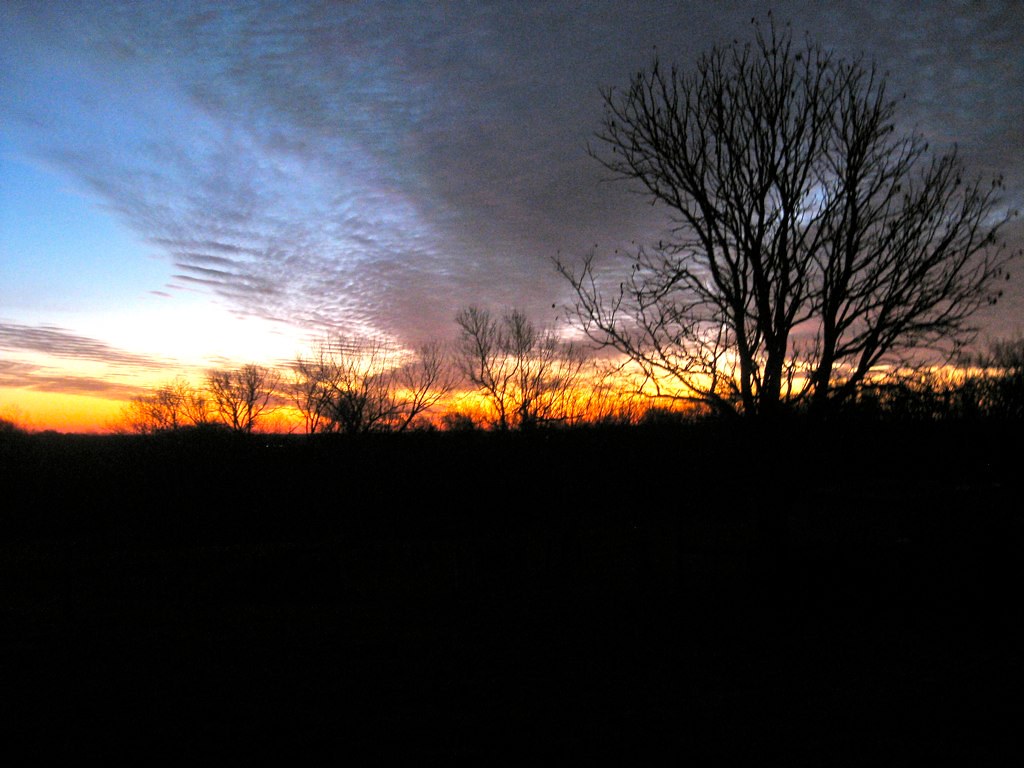
At one point, right after I got out of bed, I stepped outside in order to see which neighbors' dusk-to-dawn lights were still operating; misery loves company, you know. The sun was just starting to come up; the temperature was about eighteen degrees. A flock of geese flew straight out of the sunrise, as it were, honking in unison. I wish I could have somehow captured that moment, but I doubt my camera would have done it justice; you just had to be there. I did take some pictures after the geese were long gone. Click on them to see them larger.
Just imagine a couple of big "V's" of geese flying out of the left side of that picture where there's the most light. It was magical.
This one was taken a couple of minutes later, and I didn't intend to take any more.
After awhile, though, I peeked outside in hopes of seeing a KCPL truck coming to save us.
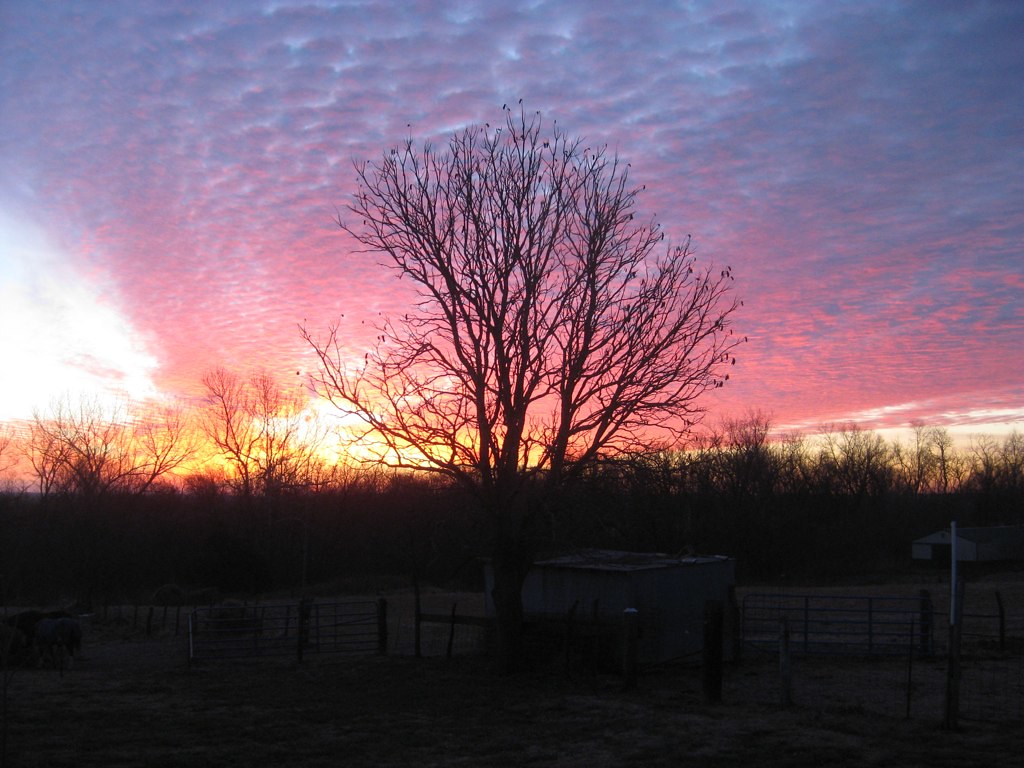
I briefly forgot about the lack of electricity when I saw the Kentucky Coffee Bean tree in silhouette against the sunrise.
It was almost worth the power outage. Almost.
I pulled out the old camper coffeepot, thanked God that we have a propane kitchen range, and made coffee with the little bit of water I'd managed to milk from the lines as the pump went idle. I turned on a couple of burners for heat, got out the portable battery-operated radio I used to keep at the cabin, and listened to an all-request country music call-in show on KMZU playing wonderful oldies.
It wasn't really such a bad morning, even if I did have both pajamas and sweats on, inside my Carhartts.
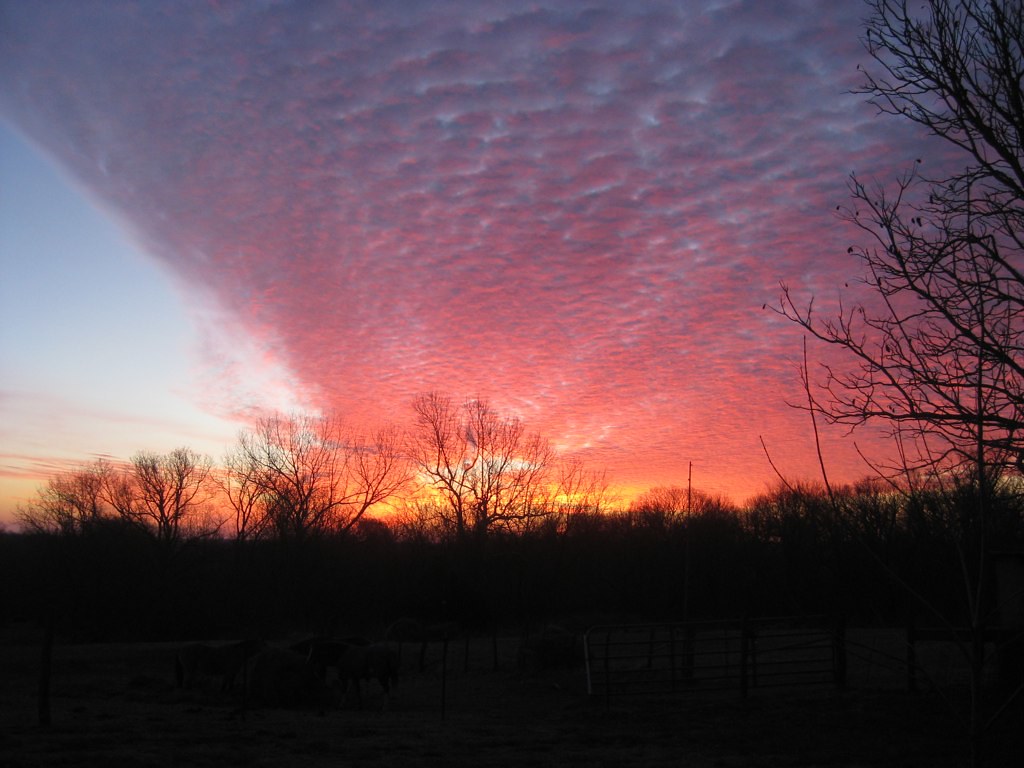
When I headed out to milk the cow, I noticed clouds in the east, so I put down my bucket, went inside, got my camera, and slipped it in my pocket. I've learned that early-morning clouds in the east can mean a beautiful sunrise will soon appear.
When I came out of the barn with frothy, warm milk in my bucket, I was rewarded with this sight, and I took a picture.
I spent about five minutes straining the milk and putting it away. When I stepped back outside, this moment of glory was gone. I've learned over the years that if you want a picture of a pretty sunrise or sunset, you'd better be quick. The beauty lasts but a short time.
When you think about it, each of life's golden moments is like a pretty sunrise; you'd better savor the good times while you have them. There will be others, but none will be exactly like this one.
Speaking of brief, the hummingbird season is about over, too. Two weeks ago I couldn't keep the feeders full of nectar. Now I only fill them halfway, and I still end up pouring some out. I've learned if I don't keep the nectar fresh, they stop drinking it.
Some people take the feeders down "so the hummingbirds will fly south". Others, as mentioned on a hummingbird education website, go to the opposite extreme: "Q: Will I keep the hummingbirds here if I feed them into the fall? A: It is not necessary to take down feeders to force the birds to fly south. They will migrate. If hummingbirds are sticking around, it could be because they are sick or injured. Some experts recommend leaving the feeder up with a spot light (150 watt bulb) on the feeder to keep the nectar from freezing). Amazingly enough some hummingbirds are still able to find insect larvae in the bark of trees. It is not necessary to ‘fly’ the birds south. Nature is nature and is never a guarantee that all birds will survive."
Personally, I take my feeders down when they haven't seen any action for a few days. It makes me sad to see the tiny birds leave, but next spring I will be so excited to see the first arrivals; so in a way, their absence is worth it. Perhaps if I had to feed them year around it would start to seem like drudgery. Just one more reminder to enjoy a good thing while I have the opportunity.
"To everything there is a season, and a time for every purpose under heaven."